Beyond Boundaries: My Field Experience in Community Forestry Conflict and Conservation
By Sudip Adhikari
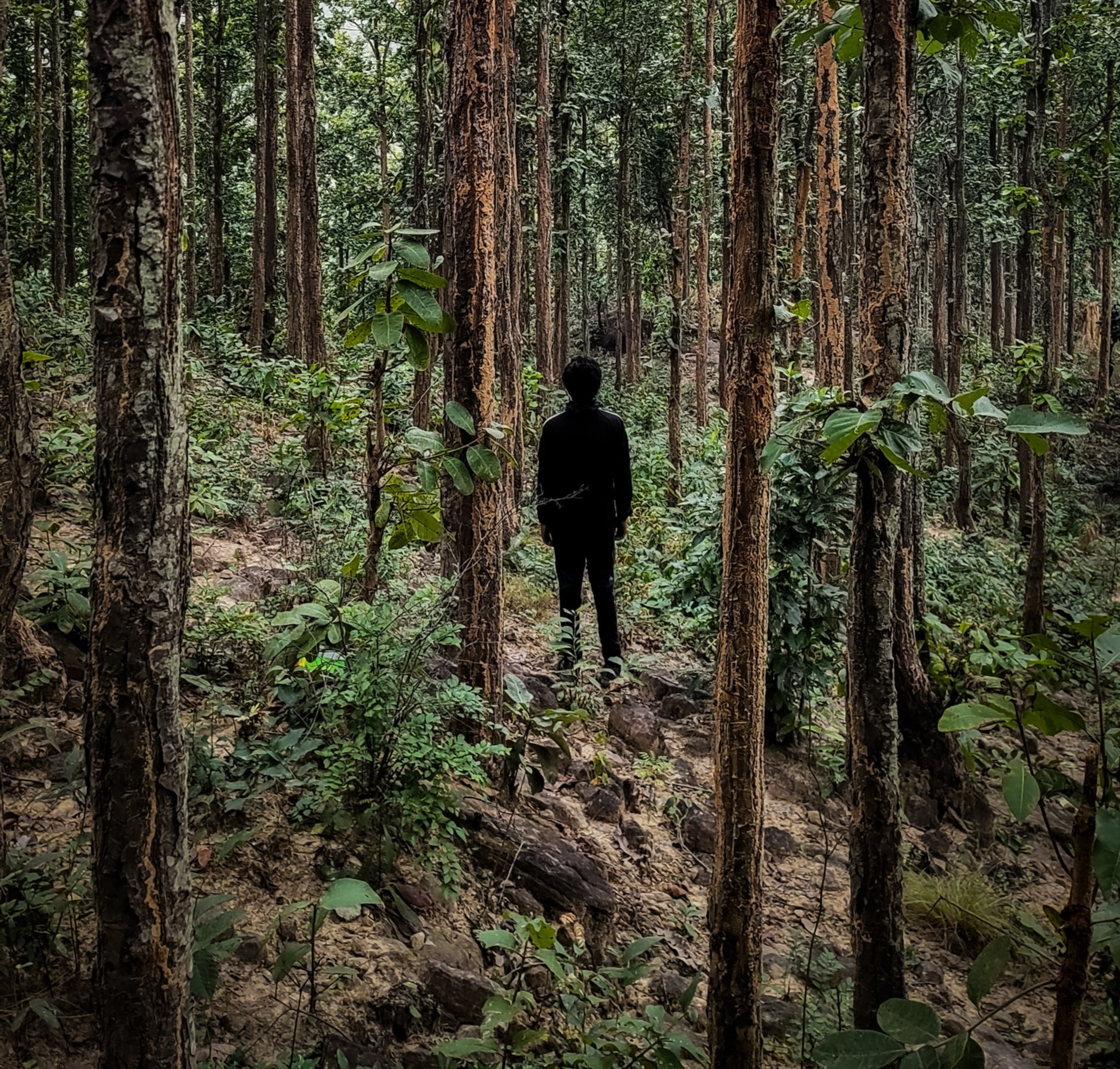
In Mangsir 2081 BS, I packed my bags and headed to Lamahi, Dang, with my friend Dinesh Yadav. We were assigned to Bangau Community Forest (CF) for two months to help prepare it’s forest operational plan. Under the guidance of Ranger Dibas Kumar Pariyar, it seemed like a straightforward job : walk the boundary, do forest inventory with the help of GIS mapping and help to prepare operational plan as a forest technician. But once we got to the field, we learned that forests aren’t just about trees and data they are about people, power, and sometimes, conflict.
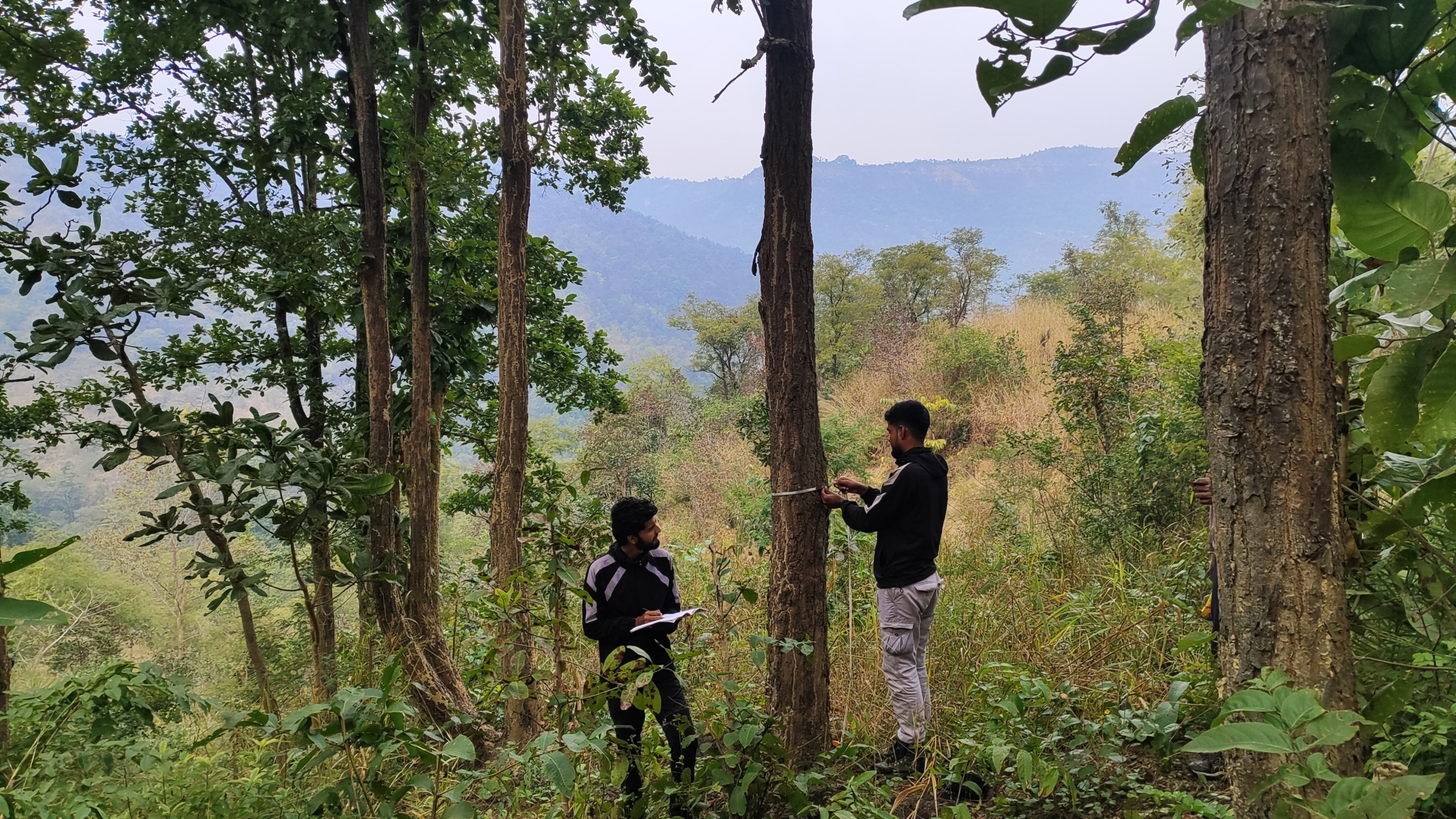
Into the Field
We started on the western edge of the forest, where Bangau CF meets Chapparkhola CF. With GPS, copy and pen in hand, we walked through thick vegetation, crossed dry streambeds, and logged boundary points with the people of Bangau CF. Day one went smoothly. But the next day, as we moved to the eastern side, we unknowingly stepped into something much more complicated.
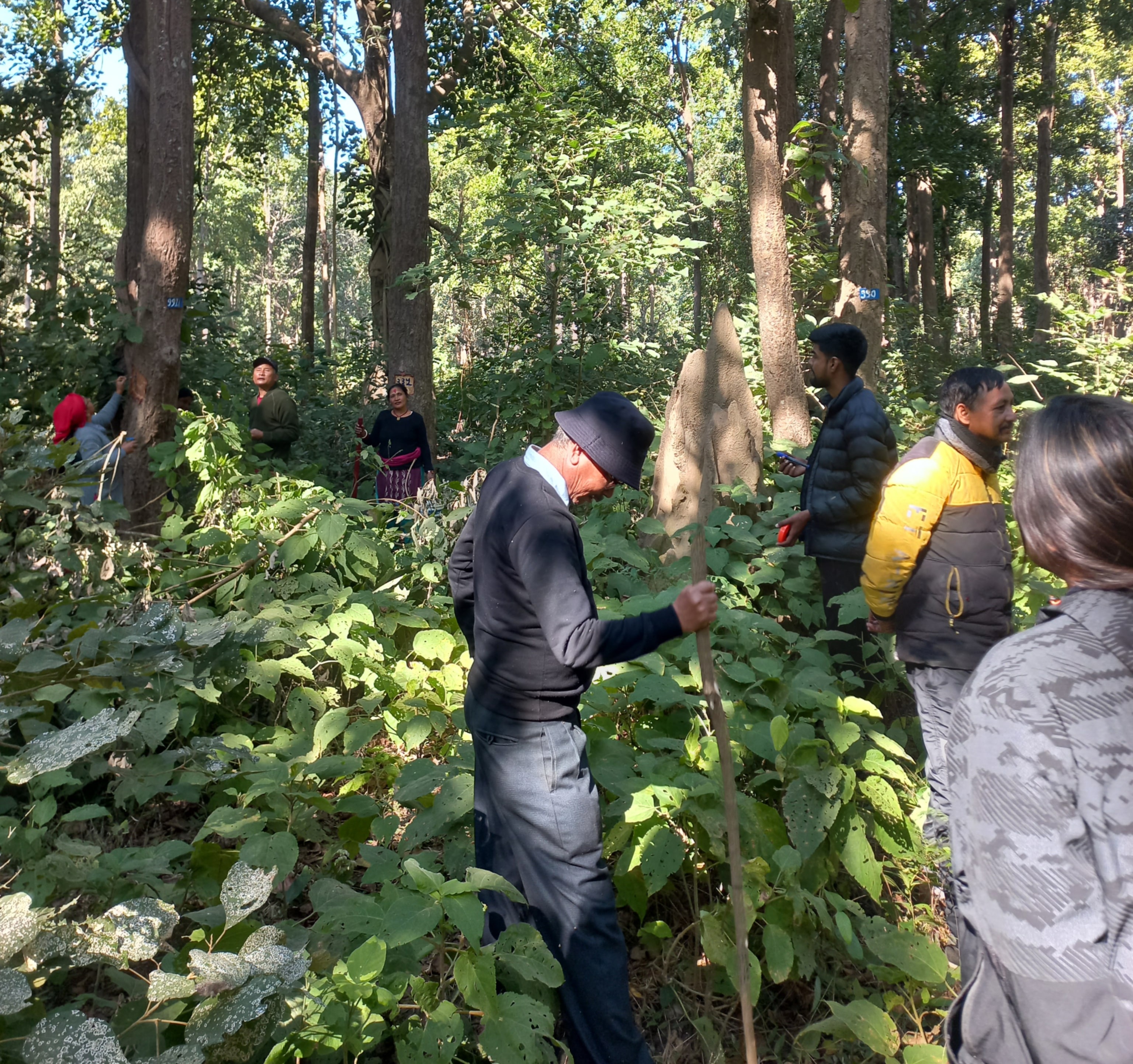
Conflict at the Border
On the east, Bangau CF borders Narayanshwor CF and it didn’t take long for
tensions to rise. We found ourselves in the middle of a long-standing land dispute
between the two CFs.
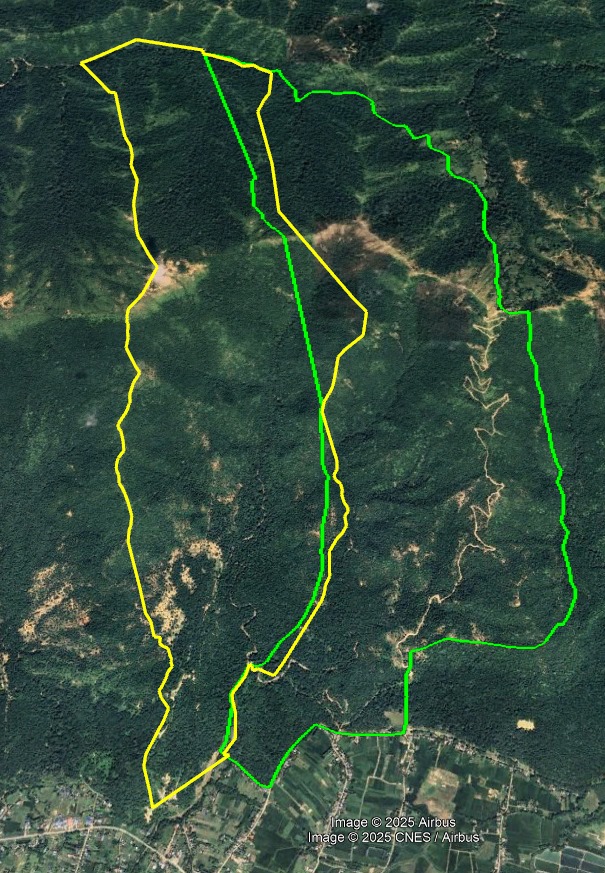
Narayanshwor had updated its operational plan two years ago. Their forest area
had jumped from 452 ha to 509 ha, an increase of 57 ha. When Bangau members
saw this, they were outraged.
Narayanshwor claimed they had added some national forest land as community
forest land as per guidelines in new operational plan. But as per Bangau members,
the national forest in that area is only around 30 ha. So even if Narayanshwor
added all of that, how did they end up with 509 ha? What about the extra 27 ha?
It didn’t add up. Bangau CF members believed that Narayanshwor had not just
added national forest , they had taken part of Bangau’s forest too. That’s when the
arguments really began.
Tensions Rise
As we continued our boundary survey under the guidance of Ranger Dibas, this
time strictly following Bangau CF’s known limits, the frustration among Bangau
locals grew.
When we finished our boundary survey, we found that if the disputed overlapping
area was removed, Bangau CF would be left with just 420 ha, down from the 448
ha recorded in their previous plan. The missing 28 has lined up suspiciously with
the ‘mystery’ increase in Narayanshwor’s area.
The anger among Bangau’s community was real. This wasn’t just land, it was
their forest, their source of income, and a part of their identity. They didn’t want
to lose it.
Soon, the situation got tense. Locals came out with sticks, ready to defend what
they believed was rightfully theirs. Meetings were held. Arguments grew louder.
But in the middle of it all stood one calm, steady voice: the woman president of
Bangau CF.
Leadership that Matters
She didn’t shout or panic. She spoke with strength and clarity, representing her
community with quiet confidence. In a male-dominated space, her leadership
stood out. She told that she didn’t want an inch of anyone else’s forest, but she
wasn’t ready to give up even 0.1 ha of their own either.
Some even said that in the past, Narayanshwor had tried to take advantage of
Bangau CF, thinking its leadership was weak. But things were different now. With
her at the front, Bangau CF had someone who could hold the line, not with anger,
but with grace and reason.
She helped keep the community focused, and her role was key in preventing the
situation from going out of control.
Searching for Solutions
Together with Ranger Dibas, we tried to mediate. Using older maps, Google Earth
Pro, and ArcGIS, we carefully compared forest boundaries and land cover. The
satellite data backed Bangau’s claims , the overlapping land seemed to match the
"extra" area Narayanshwor had claimed.
But Narayanshwor’s members refused to accept it. They argued that their 10-year
operational plan had already been approved by the authorities, and changing it
now would waste all the money and effort they had put into it. They also pointed
fingers back, saying—if there was really a problem, why didn’t Bangau’s
previous male president speak up back when their plan was being prepared?
The meetings used to be daily regarding the issue, full of arguments,it felt like we
would never reach an agreement. Both sides were tired, but no one was ready to
give up. The pressure kept building. In the end, Ranger Dibas had to step in more
strongly. He said that Narayanshwor would need to return the disputed land in
their operational plan revision. If they didn’t, all forestry work from both CFs
would be stopped. That warning didn’t fix things right away, but it helped calm
everyone down and brought the situation under control.
Gradually, the situation calmed. We were able to get back to our actual work.
Back to the Forest
We resumed the remaining field tasks and:
● Conducted forest inventory in Bangau CF.
● Divided the forest into several equal blocks using GIS tool.
● Conducted stem mapping in a block with yield, leaving mother tree as per
forest guideline
● Tagged trees for harvesting, a process known as Chhapan in the local
context
Once the draft operational plan was ready, it was sent to officials for final
approval.
Lessons Beyond the Trees
This wasn’t just a technical job. It was a deep lesson in the connection between
people and forests. In Nepal, community forests are a major success , but they are
also complex. Boundaries aren’t just lines on a map. They represent identity,
income, and decades of hard work. When those boundary lines shift, people fight
not just with data, but with emotion.
This experience also taught me how leadership can shape outcomes. The woman
president of Bangau CF didn’t just speak for her forest, but also became one of
the example that women also can manage the forest effectively. Her presence
reminded me why women’s involvement is so important in conservation efforts
in forestry. When women are empowered, entire communities grow stronger.
Final Thoughts
What I thought would be a simple assignment turned into a real-life lesson in conflict, leadership, and the human side of conservation. In just two months, I learned that protecting forests isn’t only about tools and technology, it’s about trust, clarity, and courage. And sometimes, the strongest voices are the ones that speak with calm, like the woman who led Bangau CF when it mattered most.
About the Author
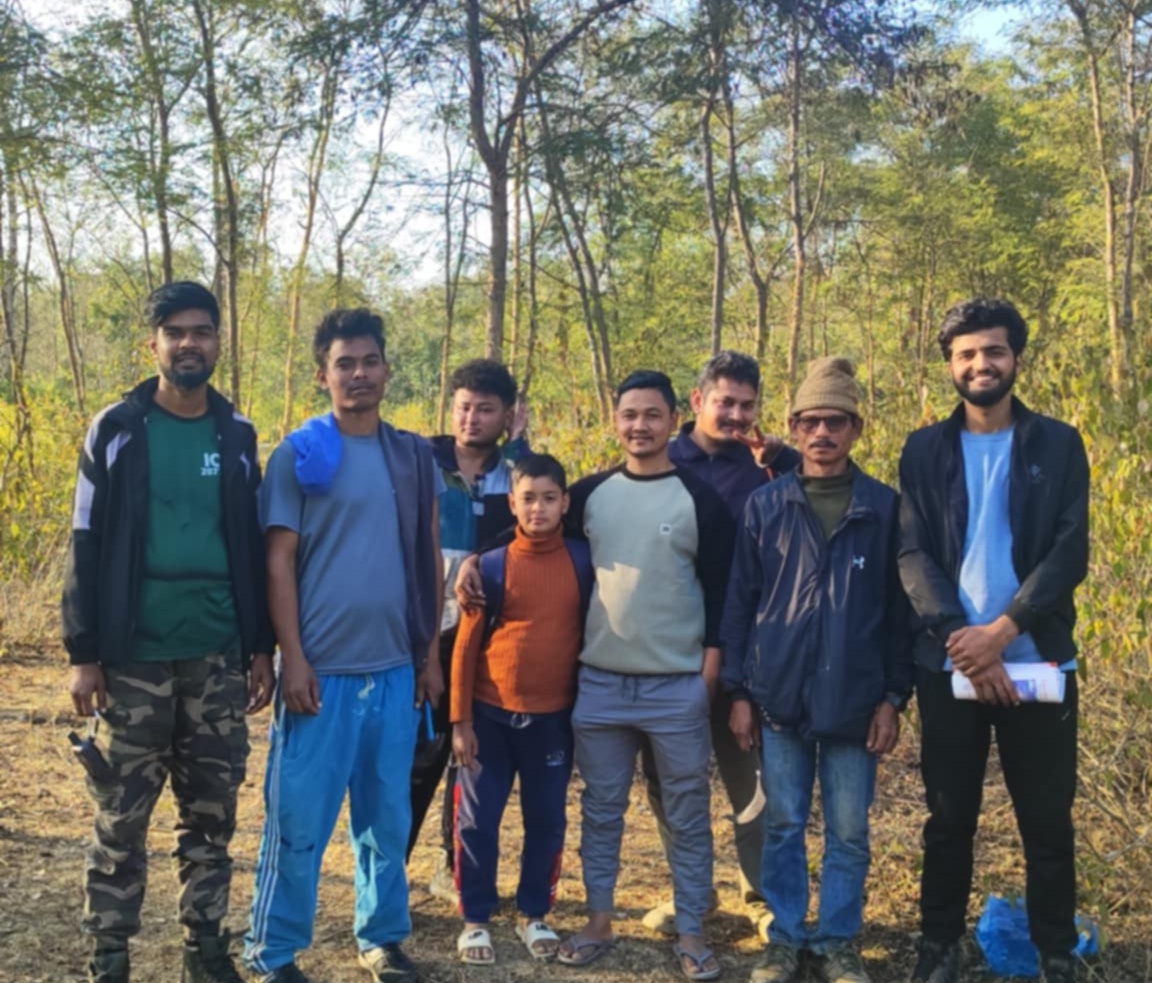
Sudip Adhikari is a graduate forestry student from Institute of Forestry, Hetauda, Nepal who is passionate about fieldwork, GIS, and community-based resource management. This blog is based on his two-month field assignment in Bangau Community Forest, Dang.